VENTURI / Technical insight
Valve Actuator Selection: Torque, Thrust and Fail Position
Quick answer
Actuator size is not determined by valve diameter alone. Establish worst-case torque or thrust, differential pressure, available supply, stroke time and failure position together. A matching mounting flange does not prove adequate output.
How do torque and thrust differ?
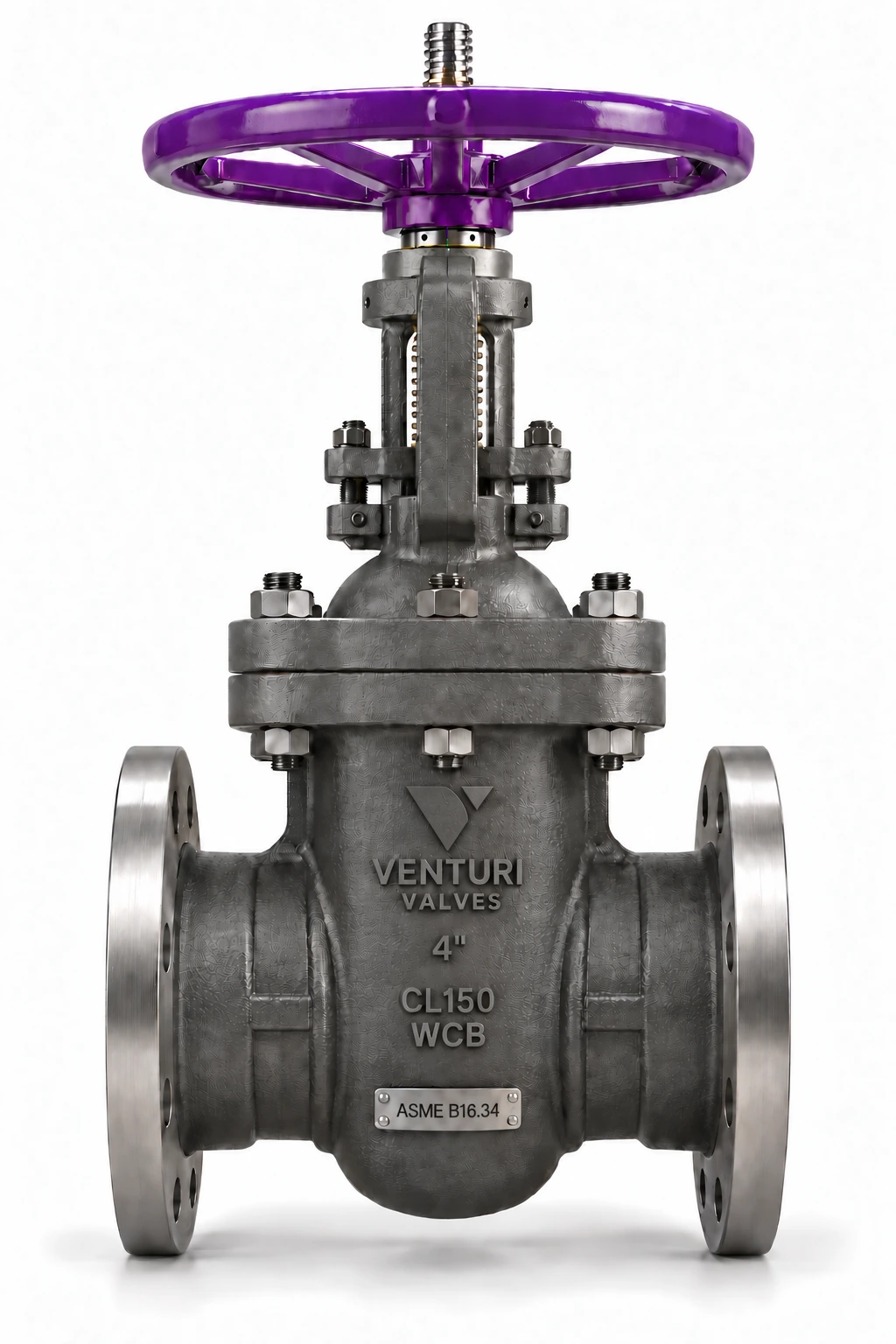
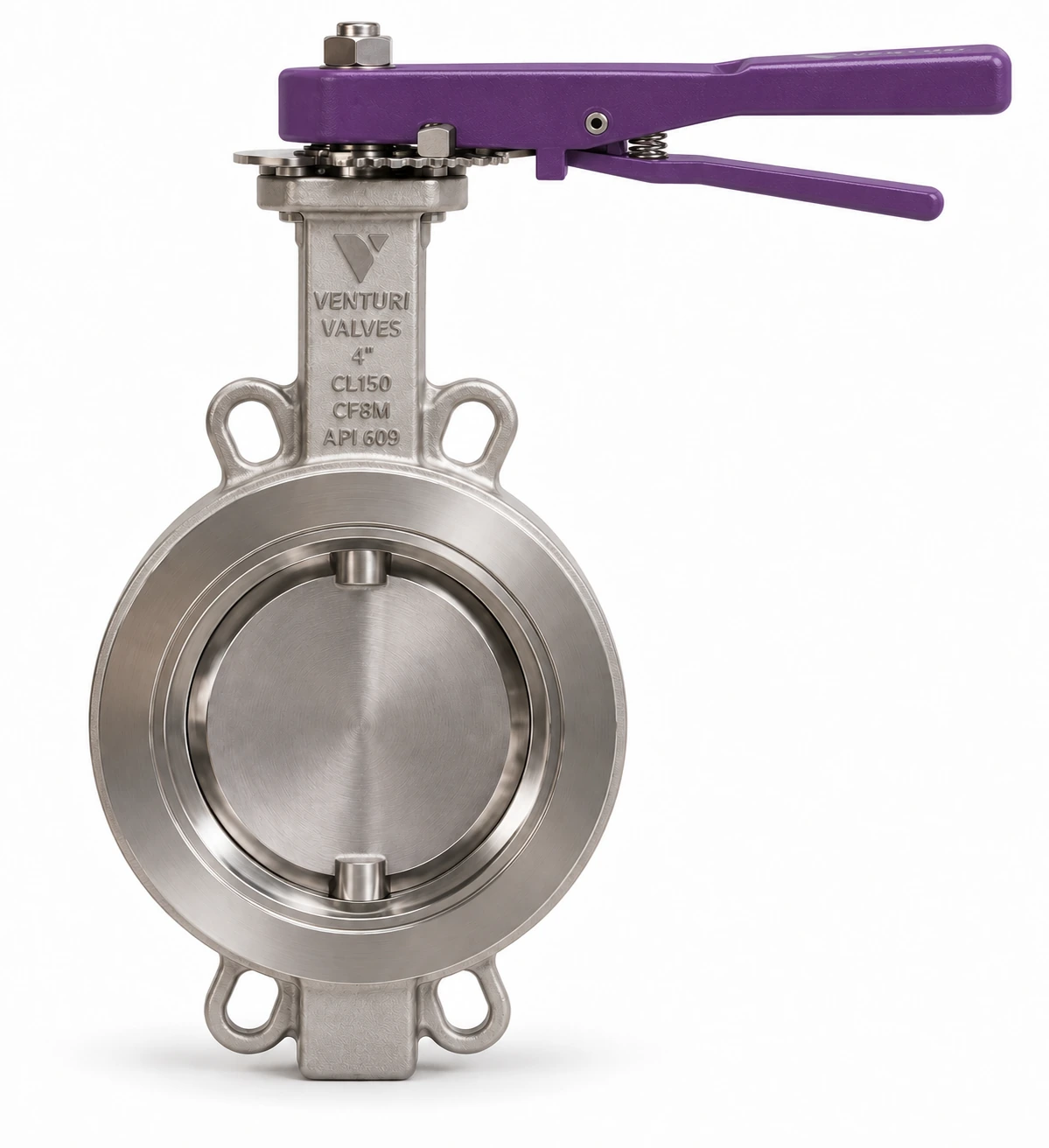
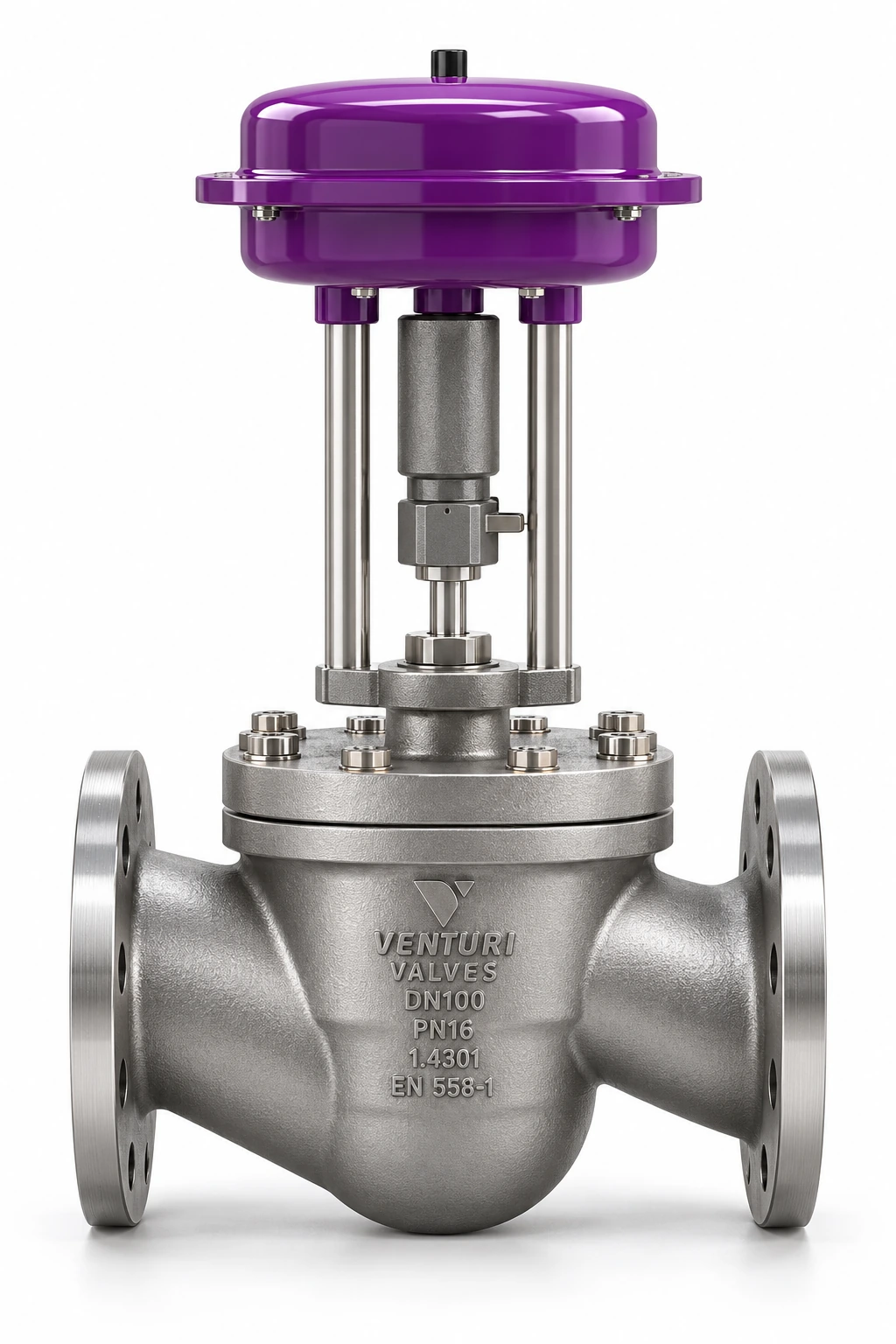
Quarter-turn butterfly and ball valves use rotary torque, usually expressed in N·m. Linear globe valves require thrust in N or kN. Gate valves often use a multi-turn mechanism, where torque and axial load depend on the stem and gearing. Mounting interfaces for different motion types are not interchangeable.
Which torque value should be used?
Breakaway, running and closing demands can differ with dwell time, temperature, fluid and maximum differential pressure. Obtain the manufacturer’s torque curve for the duty and an appropriate sizing margin. One universal factor is not suitable for every application. Output must also respect stem and drive-train mechanical limits.
How should pneumatic and electric options be compared?
For pneumatic units, use the minimum available pressure at the actuator, not just nominal compressor pressure. Check the full air and spring strokes of spring-return units. Electric units require voltage, duty cycle, modulation and environmental checks. Stroke time must suit the process; faster closure is not automatically better.
What should the valve do on loss of energy?
Fail-open, fail-closed or hold-last-position behaviour comes from the plant’s process assessment. A double-acting pneumatic or standard electric actuator does not automatically fail closed. Springs, stored energy or a separate arrangement may be needed. Include limit switches, feedback, control signals and environmental protection in the specification.
| Check | Information for the decision |
|---|---|
| Load | Torque/thrust, maximum Δp, temperature and cycles |
| Supply | Minimum air pressure or electrical data |
| Behaviour | Stroke time, control signal and fail position |
Frequently asked questions
Does an ISO 5211 flange prove sufficient torque?+
No. Interface compatibility, load limits and actual operating torque need separate checks.
Does an electric actuator always close on power loss?+
No. The required fail action needs a suitable return mechanism or energy reserve.
Contact Venturi for selection and technical verification against your application requirements.