VENTURI / Technical insight
Steam Isolation Valve Selection and Condensate Control
Quick answer
Steam valve selection starts with saturated or superheated conditions, pressure-temperature pairs, isolation duty and operating cycles. Condensate accumulation and waterhammer require assessment of piping and drainage as well as the valve.
Why distinguish saturated and superheated steam?
Saturated steam pressure and temperature are linked by saturation; superheated steam needs a separately stated temperature. Identify gauge or absolute pressure. Keep normal, design, warm-up and shutdown conditions distinct. Verify body, internals and gasket limits at the relevant temperature.
How do you choose globe, gate or butterfly isolation?
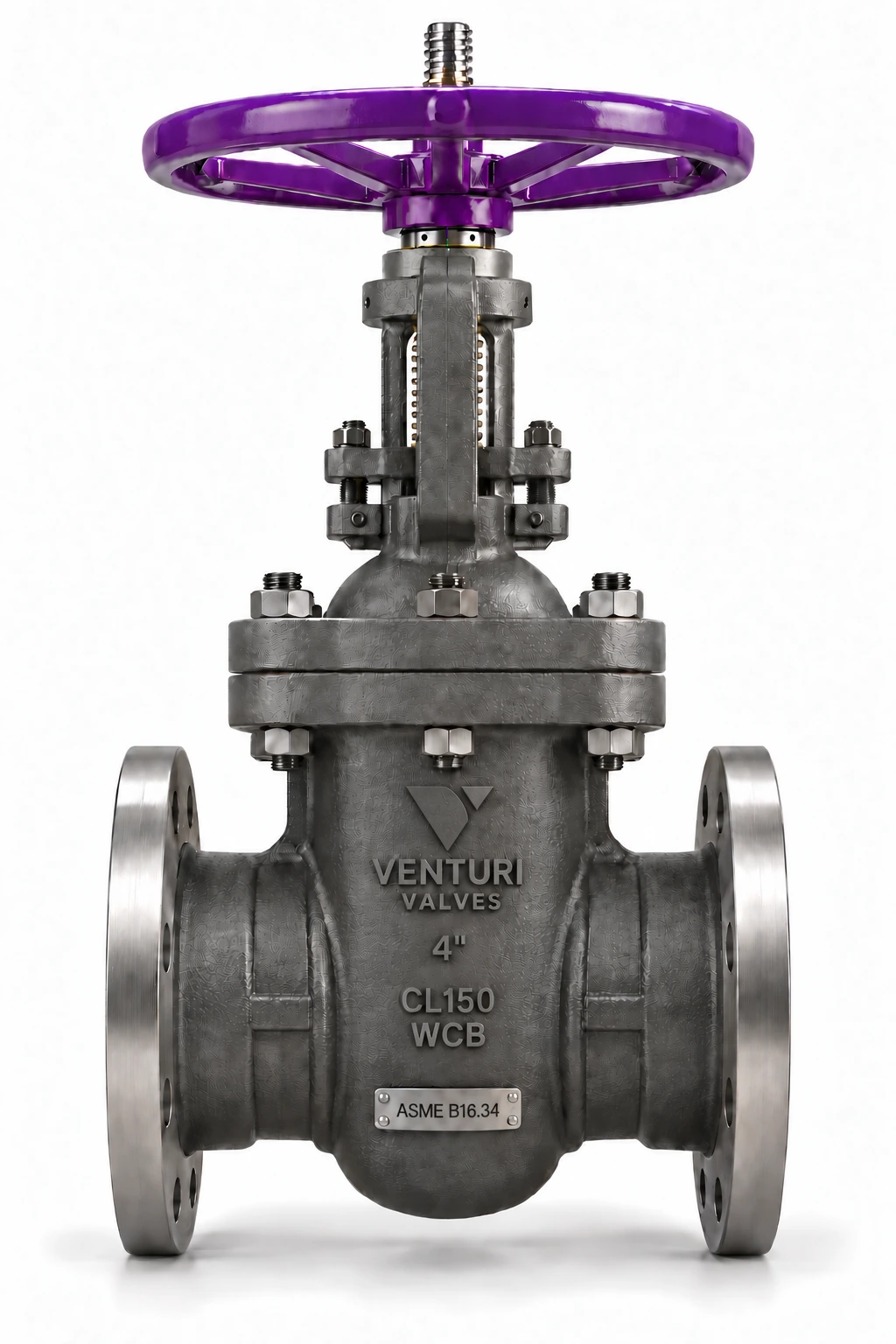
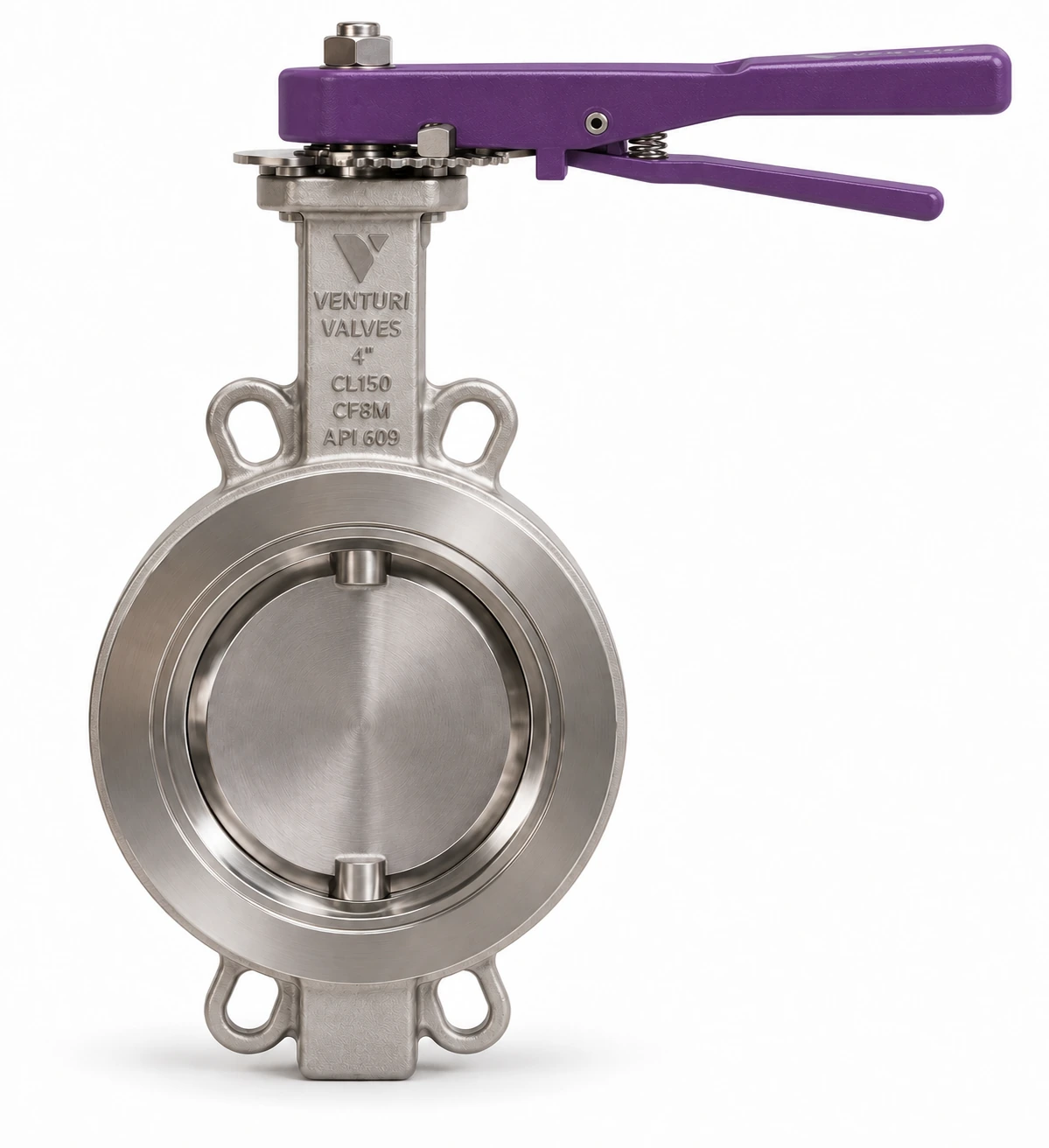
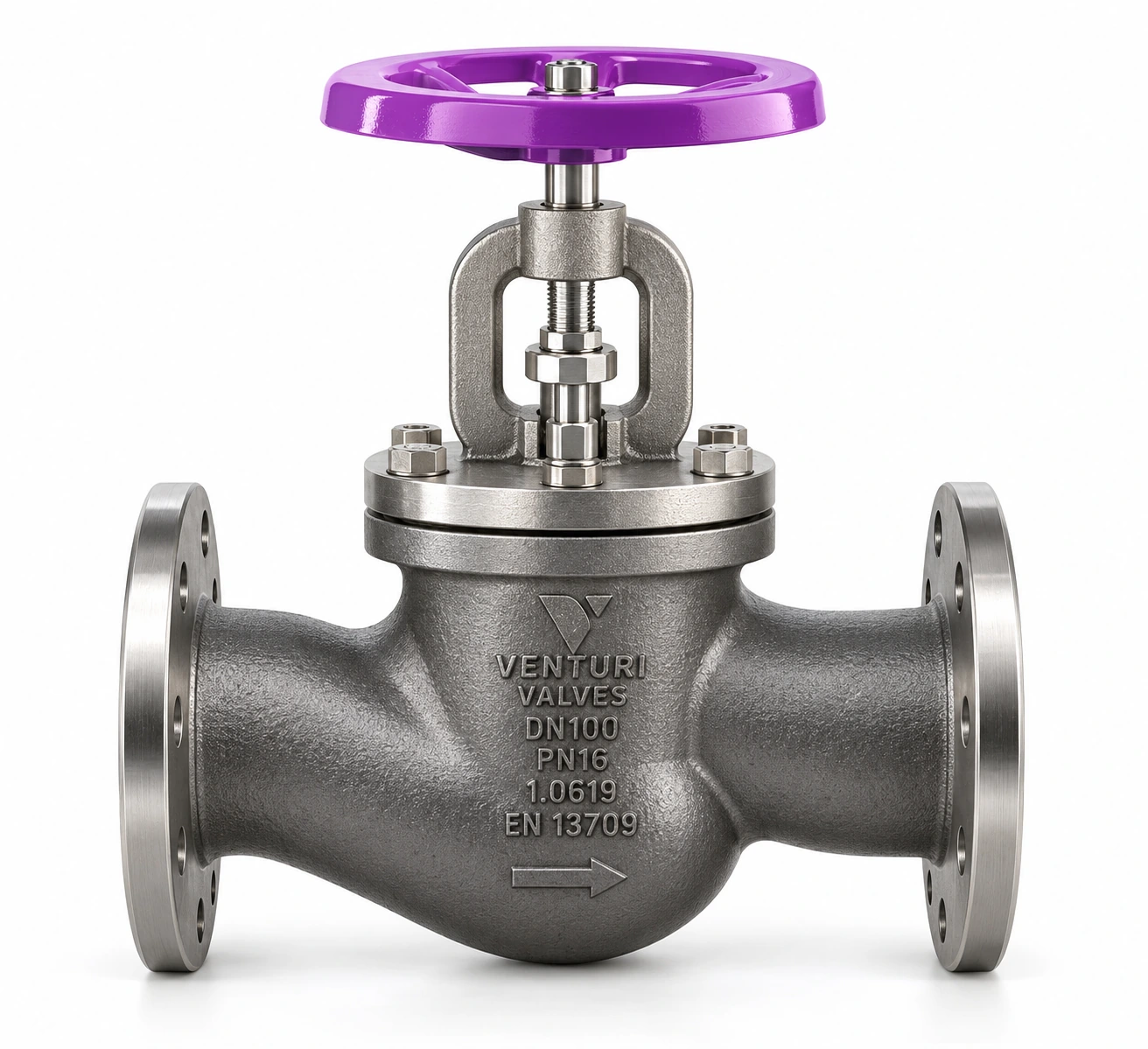
A bellows globe design can be considered when stem emissions matter. Gate valves may suit full-open isolation where low resistance is sought. Suitable metal-seated butterfly designs offer compact quarter-turn arrangements. These are starting points, not approval for every steam line. Continuous pressure or flow control needs a separate control-valve assessment.
Why must condensate be considered with the valve?
Warm-up and operating heat losses form condensate. Inadequate drainage can leave water that is swept along by steam; rapid condensation can also contribute to pressure shocks. A higher-rated valve alone is not the solution. Review pipe slopes, low points, drain pockets, traps and operating procedures together.
What matters at warm-up and enquiry stage?
Warm up a cold steam line using an approved procedure with verified drainage, not by abruptly opening the valve. Any warming line or bypass requires project assessment. Provide steam type, operating/design pressure and temperature, flow, maximum differential, connections, cycling and required date so Venturi can assess isolation and supply options.
| Check | Information for the decision |
|---|---|
| Steam condition | Saturated/superheated, pressure basis and temperature |
| Valve duty | Isolation/control, differential pressure and cycles |
| Line conditions | Drainage, warm-up and installation arrangement |
Frequently asked questions
Can a higher-Class valve solve waterhammer?+
Not on its own. Address condensate, drainage, piping and operating causes.
Does every bellows globe valve suit every steam line?+
No. Check the model’s pressure-temperature, material, differential and cycle limits.
Contact Venturi for selection and technical verification against your application requirements.