
Forged Steel Gate Valve
DN15–50 forged gate valve family: Class 800 / 1500 socket-weld and flanged-series dimensions, with A105, LF2 and A182 material options.
Ranges cover different configurations within the product family. Maximum pressure and temperature do not apply simultaneously; verify the material and pressure–temperature rating for the selected configuration.
01 / Overview
Forged Steel Gate Valve
For small-bore isolation, select forged gate valves by material, end connection and rating. Socket weld (SW), butt weld (BW), NPT threaded and flanged ends use different dimensional and connection requirements. Class 800 SW dimensions cannot be substituted for flanged Class 150 dimensions.
Size alone is not enough. We consider medium, temperature, differential pressure, connections and sealing requirements together.
02 / Technical specifications
Technical specifications
| Nominal size | DN15 – DN50 |
|---|---|
| Pressure class | CL150 – CL1500 |
Ranges cover different configurations within the product family. Maximum pressure and temperature do not apply simultaneously; verify the material and pressure–temperature rating for the selected configuration.
Contact Venturi for selection and technical verification against your application requirements.
How is the pressure–temperature limit verified?
PN / Class is a rating designation, not an allowable working pressure at every temperature. Material and temperature notes in the datasheet do not provide a complete pressure–temperature rating table. Obtain approved limits for the actual operating and design conditions, body, trim, gasket and packing. Do not combine maximum pressure and maximum temperature into one operating point.
Source: Venturi — Forged Gate Valves · pp. 09–10 · ASME B16.34 — Valves: Flanged, Threaded and Welding End
Low- and high-temperature service
The sheet lists A105 / LF2, alloy A182 and stainless A182 options. The low-temperature entry for A105 does not establish impact-test qualification or low-temperature suitability. At high temperature, a material name alone does not establish allowable pressure; request material certification and configuration-specific pressure–temperature approval.
Selection and quotation inputs
Provide medium and concentration, minimum / normal / maximum temperatures, operating and design pressures, shut-off differential pressure, DN, end standard, cycling frequency, actuation and required test documents. Distinguish isolation duty from continuous flow control.
| Component / series | Options |
|---|---|
| Body / bonnet | ASTM A105 / A350 LF2 / A182 F12, F22, F5, F91, F304, F316, F321, F347 |
| Sealing / seat | 13Cr / HF / Stellite |
| Stem | SS420 / SS304 / SS316 |
| End references | SW: ASME B16.11 · BW: ASME B16.25 · NPT: ASME B1.20.1 · Flange: ASME B16.5 |
| DN | Class 800 SW | Class 1500 SW | Class 150 | Class 300 | Class 600 |
|---|---|---|---|---|---|
| 15 | 80 | 90 | 108 | 140 | 165 |
| 20 | 90 | 110 | 117 | 152 | 190 |
| 25 | 110 | 127 | 127 | 165 | 216 |
| 32 | — | — | 140 | 178 | 229 |
| 40 | 127 | 127 | 165 | 190 | 241 |
| 50 | 134 | 210 | 178 | 216 | 292 |
For preliminary selection. “—” means no dimension is provided in this table; it does not indicate manufacturing scope or stock. Request an approved general arrangement drawing for the exact end connection, size and rating before installation.
Sources and scope
Standard links explain scope; they are not product certificates or project approvals. Specify the applicable edition, test scope and acceptance criteria in the purchase specification.
03 / Applications
Applications
Size alone is not enough. We consider medium, temperature, differential pressure, connections and sealing requirements together.
04 / Downloads
Downloads
Contact us for documentation specific to your application.
Frequently asked questions
What information is needed for a quotation?+
Tell us the product and how to reach you. Add size, pressure or medium if available; our technical team will help with the selection.
Are PN and Class equivalent pressure ratings?+
No. PN and Class are different rating systems. Allowable working pressure depends on the standard, body material and temperature. Do not equate their numerical values.
How is an actuated valve selected?+
Define valve torque or thrust, differential pressure, operating time, control signal and fail position together. Ambient conditions and the required protection rating also affect selection.
Related products
All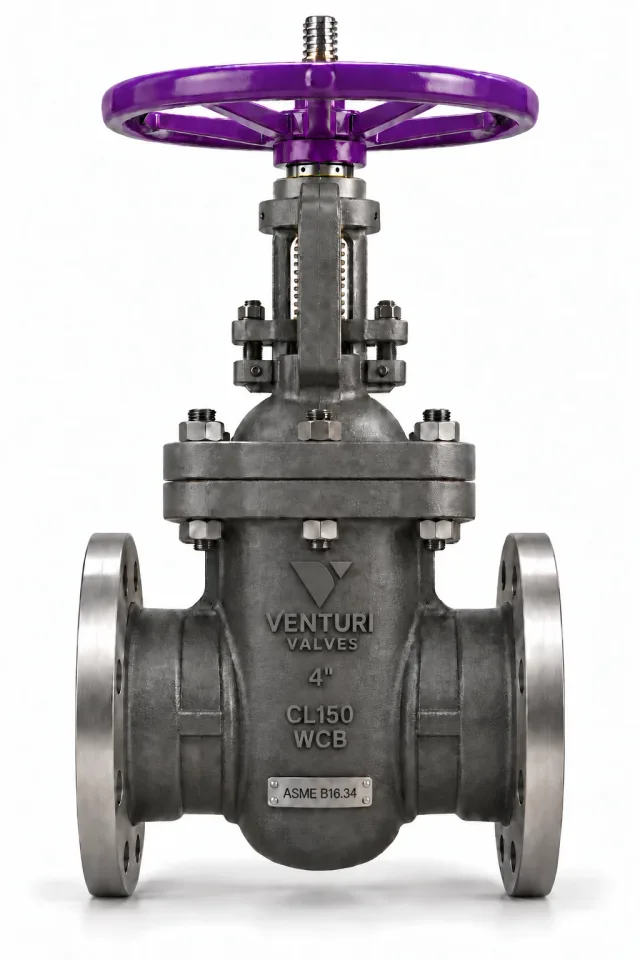
VENTURI VALVES
Let’s specify the right valve.
Tell us the product and how to reach you. Add size, pressure or medium if available; our technical team will help with the selection.