VENTURI / Technical insight
Valve shell and seat testing: API 598 and ISO 5208
Quick answer
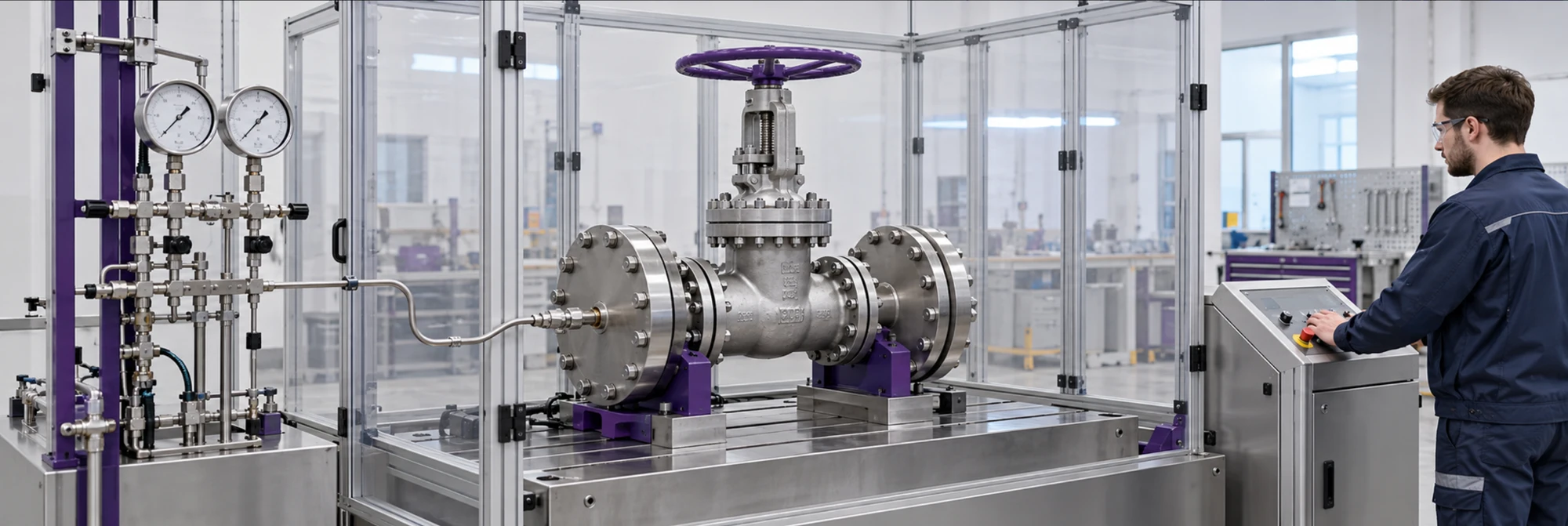
A shell test checks the integrity of the pressure boundary; a seat test checks internal leakage through a closed valve. Passing the shell test alone does not establish seat tightness.
Are shell and seat tests the same?
A shell test checks the integrity of the pressure boundary; a seat test checks internal leakage through a closed valve. Passing the shell test alone does not establish seat tightness.
What belongs in a test plan?
Identify the product, valve type, material, DN/NPS, rating, test medium, standard edition, direction, pressure and hold time. Instrument identification and result records connect the test to the product. Generic internet tables cannot replace the approved product test plan.
How should “zero leakage” be interpreted?
Read the acceptance criterion alongside seat material and the specified test conditions. Metal and resilient seats may have different limits. A tightness claim without medium, duration and measurement method is not enough for a technical comparison.
Specify testing with the order
Agree inspection plans, customer witnessing, third-party inspection and report formats at quotation stage. Send Venturi the required standards and document list together with product and process data.
Frequently asked questions
Does a shell test prove seat tightness?+
A shell test checks the integrity of the pressure boundary; a seat test checks internal leakage through a closed valve. Passing the shell test alone does not establish seat tightness.
Contact Venturi for selection and technical verification against your application requirements.