
VENTURI / Technical insight
Cavitation versus flashing in control valves
Quick answer
Vapour bubbles can form when local pressure in a liquid valve falls below vapour pressure. If pressure recovers and the bubbles collapse, this is cavitation. If vapour persists downstream, this is flashing.
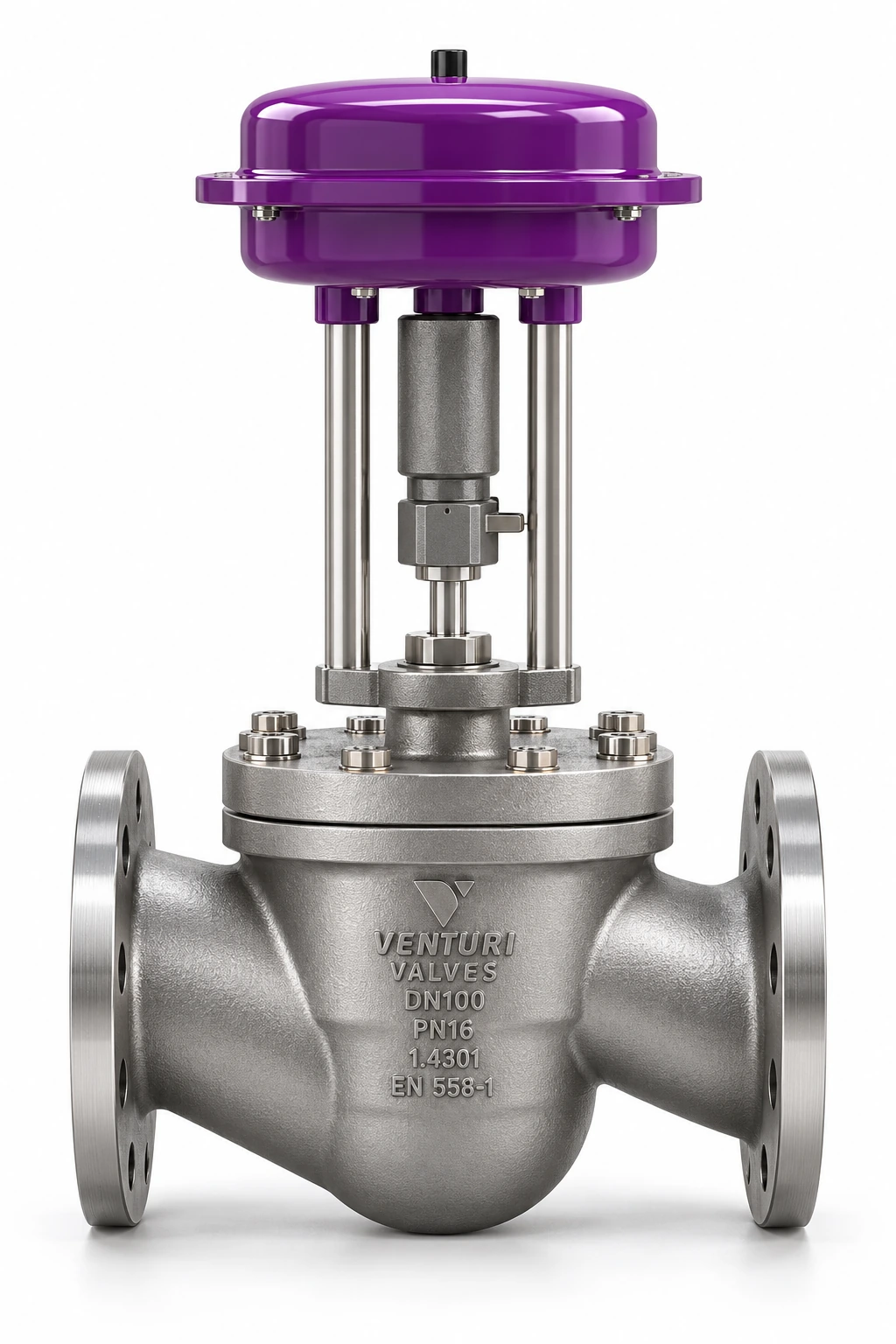
Two different pressure behaviours
Vapour bubbles can form when local pressure in a liquid valve falls below vapour pressure. If pressure recovers and the bubbles collapse, this is cavitation. If vapour persists downstream, this is flashing.
Symptoms and assessment
Noise, vibration and wear merit investigation, but sound alone is not a diagnosis. Assess inlet/outlet pressures, vapour pressure at operating temperature, flow range and valve pressure recovery together. Keep absolute and gauge pressure clearly distinguished.
Why is the solution application-specific?
Staged pressure reduction, suitable trim, materials and piping can be considered for cavitation management. Replacing a valve alone does not remove the thermodynamic cause of flashing; outlet velocity and erosion resistance also need review. Cavitation-free operation cannot be assumed without process data.
Frequently asked questions
Are cavitation and flashing the same?+
Vapour bubbles can form when local pressure in a liquid valve falls below vapour pressure. If pressure recovers and the bubbles collapse, this is cavitation. If vapour persists downstream, this is flashing.
Contact Venturi for selection and technical verification against your application requirements.